
STD Symptoms: Get Evaluated Online
Private, Convenient, Online
STD symptoms can include unusual discharge, burning with urination, genital sores, itching, pelvic pain, testicular pain, or bleeding between periods. Many sexually transmitted infections can also cause no symptoms at all.
Get Started
SIMPLE 3-STEP PROCESS
How it Works
Get evaluated online and receive treatment when medically appropriate
01
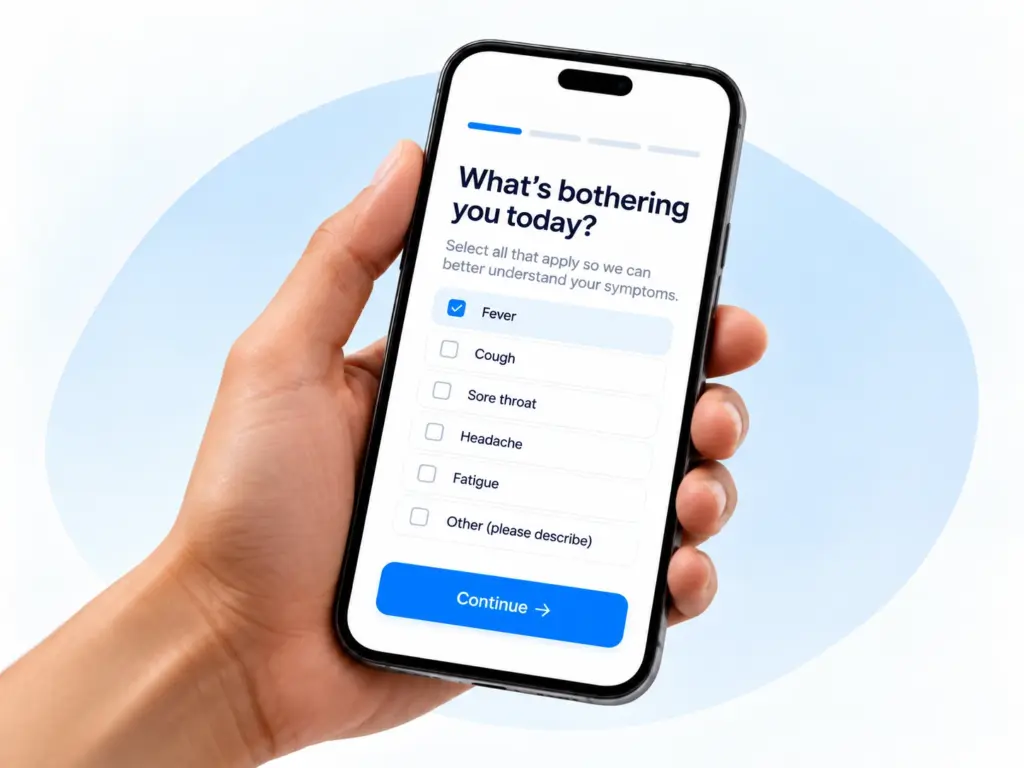
Tell Us About Your Symptoms
Tell us about your symptoms, recent exposure, sexual health history, and any STD or STI test results you already have.
02

Get Evaluated Online
A licensed healthcare provider reviews your information and determines the appropriate next steps, including whether testing or an in-person exam is needed.
03

Pick Up Your Prescription
Receive a treatment plan based on your evaluation. Medication may be prescribed when medically appropriate, or your provider may recommend testing or in-person care.
WHAT TO KNOW ABOUT CHLAMYDIA TREATMENT
Learn how chlamydia is treated, when testing may be needed, how gonorrhea can factor into care, and what to expect after treatment.

Signs & Symptoms
STD symptoms may appear within days of exposure or take weeks or longer to develop. Some infections never cause noticeable symptoms. Testing is often needed because symptoms alone cannot confirm an STD or identify the specific infection.
Medication and Treatment
Treatment depends on the infection. Antibiotics treat certain bacterial STIs, while antiviral medications may be used to manage infections such as genital herpes. A prescription is provided only when medically appropriate.

When In-Person Care May Be Needed
An in-person visit may be needed for laboratory testing, an injection, a physical examination, or symptoms that require urgent evaluation. Severe pelvic or abdominal pain, significant testicular pain or swelling, high fever, or rapidly worsening symptoms should be evaluated promptly.

After Treatment
An in-person visit may be needed for laboratory testing, an injection, a physical examination, or symptoms that require urgent evaluation. Severe pelvic or abdominal pain, significant testicular pain or swelling, high fever, or rapidly worsening symptoms should be evaluated promptly.
STD Conditions We Evaluate Online

Chlamydia Treatment
Get evaluated online for chlamydia symptoms, exposure, or a positive test and receive treatment online.

Gonorrhea Treatment
Speak with a clinician about gonorrhea symptoms or test results and determine the appropriate next step for treatment.

Trichomoniasis Treatment
Get evaluated for trichomoniasis and receive prescription treatment when medically appropriate.

Herpes Treatment
Talk with a licensed clinician about genital herpes symptoms, outbreaks, and available prescription treatment.

Mycoplasma Treatment
Get evaluated for suspected or diagnosed mycoplasma infection and discuss appropriate treatment options.

Urethritis Treatment
Discuss symptoms such as painful urination or discharge and determine whether STI testing or treatment may be needed.

Genital Warts Treatment
Get evaluated for genital warts and discuss available prescription and online treatment options.

Combination STD Treatment
Get evaluated for variety of STD and discuss available prescription and online treatment options.
Get STD Treatment Online
Sexually transmitted diseases and infections can cause a wide range of symptoms. Common STD symptoms in men include penile discharge, burning during urination, genital sores, itching, testicular pain, or rectal symptoms. STD symptoms in women may include unusual vaginal discharge, painful urination, genital sores, pelvic pain, pain during sex, or bleeding between periods.
Symptoms alone cannot reliably tell you which infection you have. Chlamydia, gonorrhea, trichomoniasis, genital herpes, syphilis, and other infections can cause overlapping symptoms. Some infections produce mild symptoms or none at all.
An online evaluation can help determine which infections may need to be considered and what testing makes sense based on your symptoms and recent exposure. Existing laboratory results can also be reviewed during your consultation.
Treatment depends on the diagnosis. Bacterial and certain parasitic STIs may be treated with prescription medication, while viral infections are managed differently. Some conditions require laboratory testing, an injection, a physical examination, or other in-person care. Your provider will recommend the appropriate next step based on your situation.

STI Testing & Treatment
When You May Need Testing or In-Person Care
Online STI treatment is not appropriate for every situation. Your clinician may recommend testing or in-person care if you have:
Start Your STD Symptoms Consultation Online
Get help understanding your symptoms and what to do next. A licensed healthcare provider can review your symptoms, exposure history, and available test results and recommend appropriate testing or treatment.
Get Started
What Patients Say About Doctor Alexa.

Excellent 4.5 out of 5 from 565 reviews on Trustpilot
I was able to get the care I needed and now am much better. Very happy I was taken care of so quickly
Trustpilot Review
Such a great easy service answers. All your question in a timely matter. I feel like I’m in good hands with Dr. Alexa and their staff.
Trustpilot Review
My transaction with Dr. Alexa went flawless…my pharmacy received the prescription quick and trouble free. And the meds did their job!
Trustpilot Reiview
It was a quick and easy process. They questionnaire was thorough to ensure they addressed my concerns.
Trustpilot Review